IN THE HOUSE OF BEER AND LIGHT

From Inhabitat.com, or wherever they got it from.

From Inhabit, or wherever they got it from.

Every time I close a realty transaction I send 10% of my commission to a friend’s organization in Haiti*, where a home can be built for about $1000. And I remember the Heineken House.

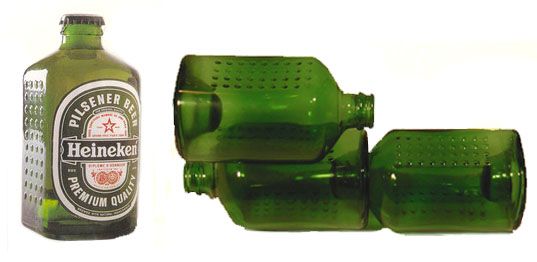
In a shining example of colonialism gone weird, Mr. Heineken himself was sunning on the Dutch-ruled island of Curacao, lamenting the native habit of discarding his product’s packaging in places that spoiled his view, when he conceived a grand idea: He would make his beer bottles brick-shaped, and the natives could use them to build their homes.

He did in fact return to Holland and commission a brick-shaped bottle that would even interlock when stacked to form a wall.

Although the public was apparently unnerved by a squarish beer bottle, depriving natives of the opportunity to dwell in their own backwash, so to speak, you have to admit it was a clever idea.

It wasn’t Mr. Heineken’s. His wasn’t even the first brewery to make a bottle brick. Bottle walls, as they’re called, go back at least to ancient Rome, where the empties were amphorae. It’s the type of clever idea that rises again and again: After the massive and horrible Haitian earthquake of 2010, I recall seeing a snapshot of wall that amounted to a chicken wire sandwich filled with soda bottles. Add stucco, and you’d never know the difference.
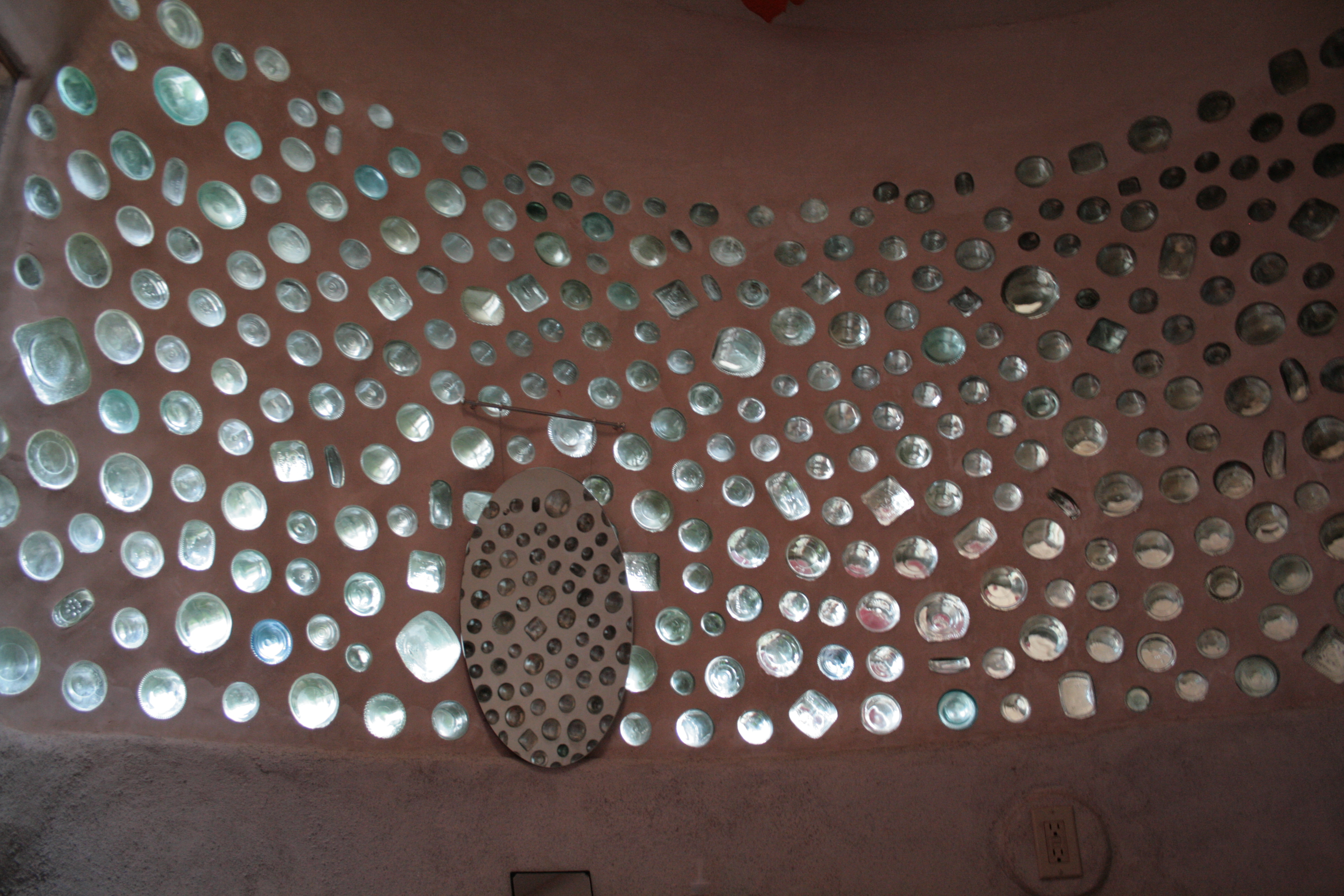
"Earthship bathroom," U.S. --wikimedia pd

“Earthship bathroom,” U.S. –wikimedia pd

What bottle walls may lack in stability, they make up for in so many other ways: The air voids are insulating. They lighten the entire structure. They turn a waste product into a cheap or free “brick” in a world where manufactured building materials are increasingly costly to produce and transport. And they can act as windows, as well as walls.

Functional fixedness, that’s that phenomenon whereby we can only see one use for an object–its same-old, traditional use. Functional fixedness is the opposite of creativity. It thrives on comfort and plenty. But functional fixedness can be broken. In a time of need, any one of us could probably come up with a way to build a $1000 house.

*Co-created by a friend of  mine, Matenwa Community Learning Center has evolved  into a powerful engine for sustainable and respectful development.
BUY ONE, GET TWO FREE, IN AROOSTOOK COUNTY!

mreis/mar

mreis/mar

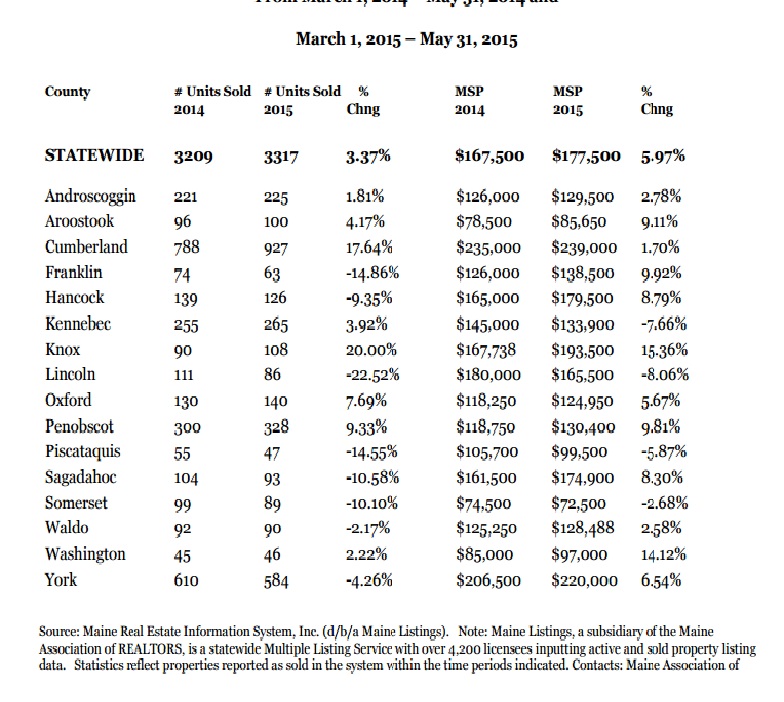
The latest summary of Maine home prices is out, and once again Portland is one click posher, and Lincoln County persists as the Reny’s of real estate. And up to The County, real estate is steady state, with the median home price chugging along in the $70s-$80s.

Portland just continues to roar, along with South Portland and nearby towns. At about $240,000 per house, Cumberland County is finally on a par with the rest of the Northeast. Southern Maine has officially arrived.

Midcoast Maine is departing. Or something. Beautiful, historical housing abounds; buyers don’t.

And The County, let’s hear it for The County. A retiree would be well advised to head north for her leisure years instead of trying to cram onto the Portland peninsula with every other Baby Boomer in the Eastern U.S. There you can buy three houses for the price of one, and Quebec City, which is every bit as cool at Portland, is just across the River.

CURTAIN: IT’S A VERB. TRY IT!l

Wikimedia PD

Wikimedia PD

A brief history of curtains: They probably started life as temporary walls, covering the hole in a hovel through which humans came and went. There were no windows.

As humans settled down, hovels grew more sophisticated, and sprung more leaks in their walls. At night and other alarming times, these holes were blocked with whatever was around–in Eurpoean hovels, usually wooden shutters mounted indoors.

As humans exploited one another more efficiently, some accumulated wealth. This they spent on heavy, woven tapestry to hang on the doorways and walls of their extra-large and drafty stone hovels.

Beds, too, figure prominently in the history of curtains.  In a cold, drafty hovel, a human body amounts to a radiator perking along at 98.6 degrees.  Curtain that radiator off in a box, and you could be quite cozy. Hence the curtained bed.

Windows of glass got invented a few hundred years ago, and while they were “permanent” compared to a flap of leather or a wooden shutter, they also let heat out and prying eyes in. Tapestries and velvet and other insulating textiles were deployed to insulate these light-holes.

Privacy was a secondary concern, in the evolution of the curtain.  Insulation was primary.

And today, this warm, summer day, you can employ your own window coverings as insulation. Covering your light-holes during the day prevents a whole swarm of therms from penetrating your house. And that will let you sleep better at night.

THE TERMITES ARE COMING! THE TERMITES ARE COMING!

OSU image

OSU image

When clients from out of state recently inquired about a termite inspection for their new nirvana, I replied, “Pffft.” Then I thought perhaps I should read up on that. Climate change… changes things.

Historically, Maine has been protected by the translucent ant-wannabes by our deep freezing temperatures. Southern Maine has rare occurrences of termites, but they lack staying power.

If this winter is any indication of what climate change does to a jet stream, there will never be another termite in Maine, ever again. Ever. And this guy says that even if someone imports termites, and a colony takes root, that colony should remain isolated: Termites don’t have time to raise a special “go forth and colonize” generation without a long, humid summer. They’ve tried it in Toronto, and failed. The colonizing generation needs wings; the wings won’t grow in Toronto.

So for now, termites are an exotic rarity. Yet another dazzling benefit of our brief, short, and truncated summers.

And if the jet stream does relent, and we do get termites, I would hope that we also get armadillos to eat them. That only seems fair.


WHERE DID ALL THE HOUSES GO?

Zillow & U.S. Census Bureau

Zillow & U.S. Census Bureau

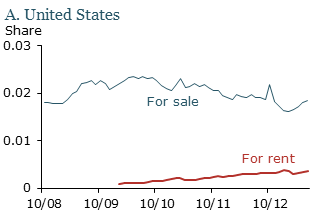
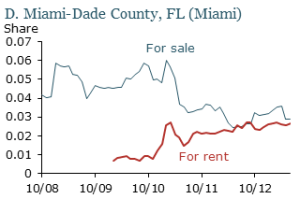
There’s a house shortage, if you haven’t heard. Caravans of mournful buyers are circling Southern Maine waiting for a chance to dash into a newly listed house and make a rash offer above asking price. It’s like musical chairs but much less fun. Why aren’t there more houses for sale? Where did all the houses go?

2013-31-2D

Zillow & U.S. Census Bureau

They’re right where we left them, says this report from the Federal Reserve. But they’re only available to renters. They’ve entered the “rental inventory.”

When the housing bubble burst (thanx, banx) oodles of foreclosed homes flooded the market. Mannnnny of these bargains were bought by the only folks who could round up credit or cash: Investors. Now they’re in use, but not in circulation.

Check out the trend lines: The housing market dwindles; the rental market swells.

13,000 YEARS OF ARCHITECTURE IN PORTLAND, MAINE

This Pecha Kucha presentation was so much fun. I learned one million things, and gained an even greater affection for this pragmatic place called Portland, Maine. Six minute video. 13,000 years of history. You can’t get much more value than that.

Click image for video:
20 hvh

CITY LIVING MAKES YOU SMARTER

wikimedia [pd]

wikimedia [pd]

OK, that’s totally inflammatory and untrue. But new research again shows there’s something to the concept that animals with complex social lives need bigger brains: Your neighborhood, figuratively, determines your intelligence.

Now, this research wasn’t conducted on actual humans. The scientist studied 104 other species of group-living primates, tallying the rate of conflict between group territories for each species. And he tallied skull size, which can tell you something about brain size, which can tell you something about intelligence.

The primate species with the most conflict between neighboring territories had the biggest skulls. Ergo, perhaps: Keeping track of your friends and enemies requires a lot of brain power; those who excel at it are more likely to live–and breed. Thus social strife can cause fat heads to evolve.

Given our colossal cranium, our truly freakish  intelligence in the animal kingdom, it might be supposed that our species is particularly prone to inter-territorial conflict. Naaah, us? C’mon.

Now, perhaps you’re saying to yourself, “Antelope live in big groups and they’re not even as intelligent as gym socks.” There’s a difference between herd animals and social animals. Herd critters (antelopes and many other grazers) gang together mainly because it reduces their risk from predators. Social animals (elephants, humans, wild dogs) use their relationships to improve their performance in other areas–food gathering, child-rearing, home-building.

Anyway, it’s interesting how our species continues to create bigger and bigger territories, like cities, like nations. And how we continue to cop a bit of an attitude about anyone from “outside” whatever group we consider ours at any given moment. Perhaps we are still getting smarter.

MAINE REAL ESTATE QUARTERLY STATISTICS

Maine real estate monthly report.

LookinMaine real estate monthly report.

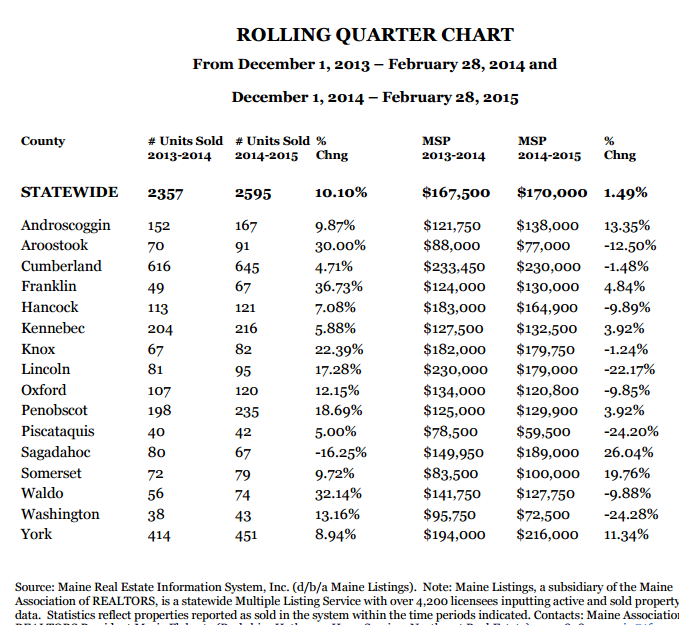
Lookin’ alive, Maine! The past quarter has seen a perkier market in all but one county. (‘Sup, Sagadahoc? I thought Bath Iron Works was on a hiring binge.)

The first three columns of that table address the number of houses sold this quarter versus the same quarter a year ago–it’s a measure of how easy (or hard) it is to get out from under a house you don’t want.

But the second three columns remind you that opportunity is not equal. These columns address any change in the average sale price, this quarter over the same quarter a year back. A big change in that average price can mean a couple things:

1: A big, expensive house sold, and its price is pushing the average around. Check the “volume” columns — a small volume of sales leaves the average price vulnerable to weirdo sales.

2: Sellers are SICK OF THIS AND GETTING OUT OF HERE EVEN IF WE TAKE A BATH ON THE PRICE! This  might explain Lincoln County, where the number of sales is up, but the price is way down.

When you look at the populous counties (York, Cumberland, Kennebec) you find smaller swings from quarter to quarter: A high “n” (number of data points) produces a more reliable signal of where people are going.


WHO OWNS THAT? REALTY SUPERPOWERS REVEALED!

When tax money flows between people and government, it often leaves a “public record,” a trail. You can use this public record to discover who owns a building. Realtors follow these trails for every house we handle, looking for back taxes, foreclosure motions, sibling squabbles, snarly divorces, and other afflictions.

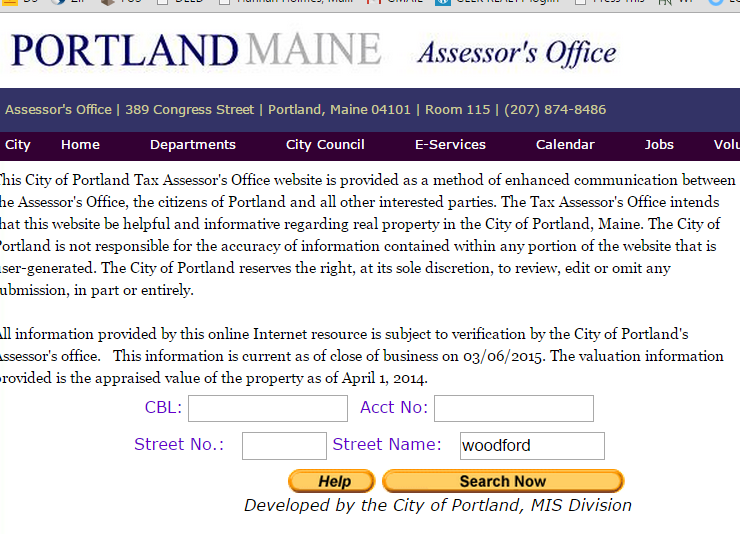
To find your own trail, start at the Assessor’s Office in your town. Here’s Portland’s.

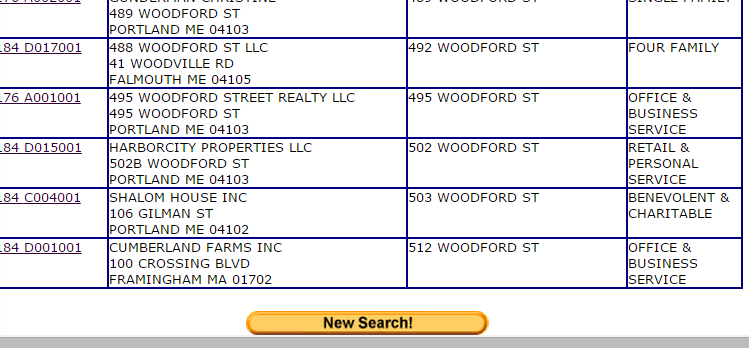
Input the street and/or street number you’re curious about. Screenshot (61) You’ll get a list of properties and tax accounts on that street; if you have the street number you’ll get just that property.Screenshot (62)

Click the account number at the left of the property you’re interested in, which will take you to that property’s “assessor’s card.” Cumby’s card, for instance, looks like this, and will contain allllll manner of info, including when it last changed hands, and for how much money. And a pretty picture, so you can be sure you’re looking at the right thing.

Screenshot (63)

Now write down the “Book and Page” Screenshot (64)numbers from the card. We’re going to find the deed for this property at the Registry of Deeds. Here’s Cumberland County’s.
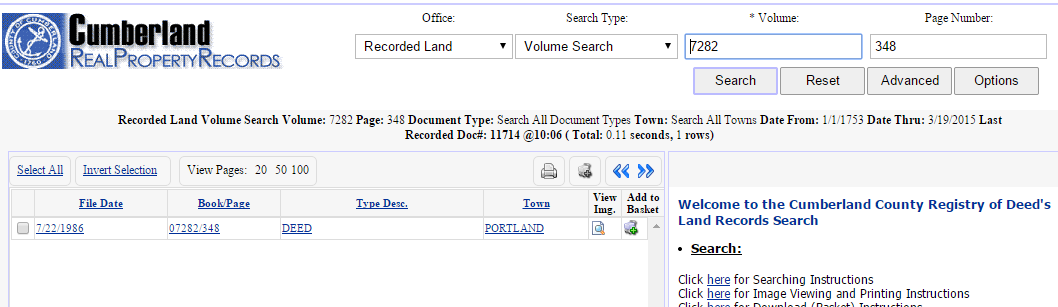
Search settings:

Office: Recorded Land

Search Type: Volume

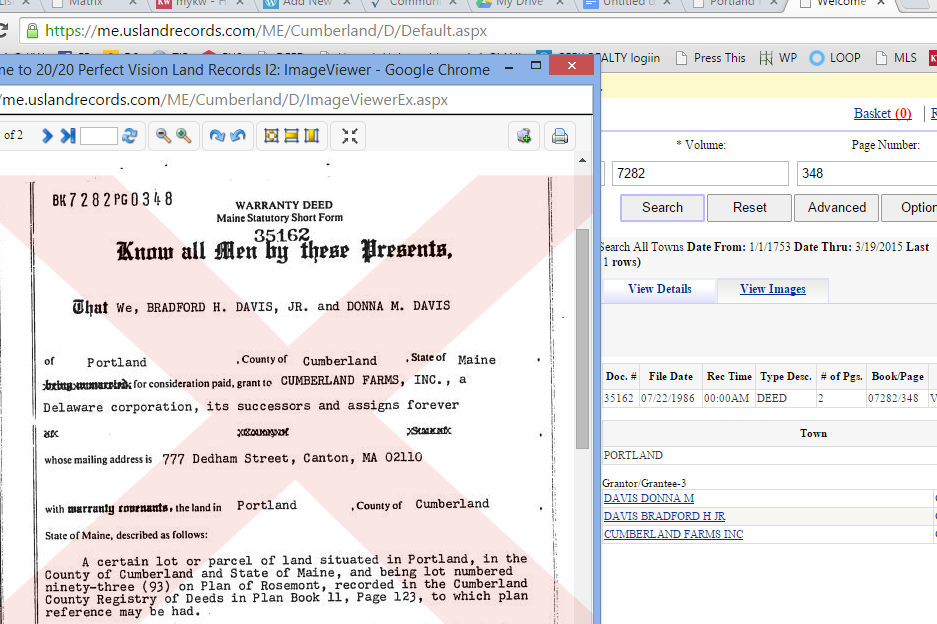
Volume (Book): 7282

Page Number: 348Screenshot (65)

GO! Up comes the result list, from which you select that tiny magnifying glass image labeled, “View img.”

And voila. There’s the deed, the public record of the last time that property changed hands.

Screenshot (66)

It gets a lot funner than that, but also a lot more wordy. But just for fun, click one of those names that appears to the right of the deed…

HOUSE-STUFFING: HOW DO YOU RATE?

The Heritage Foundation, believe it or not.

The Heritage Foundation, believe it or not.

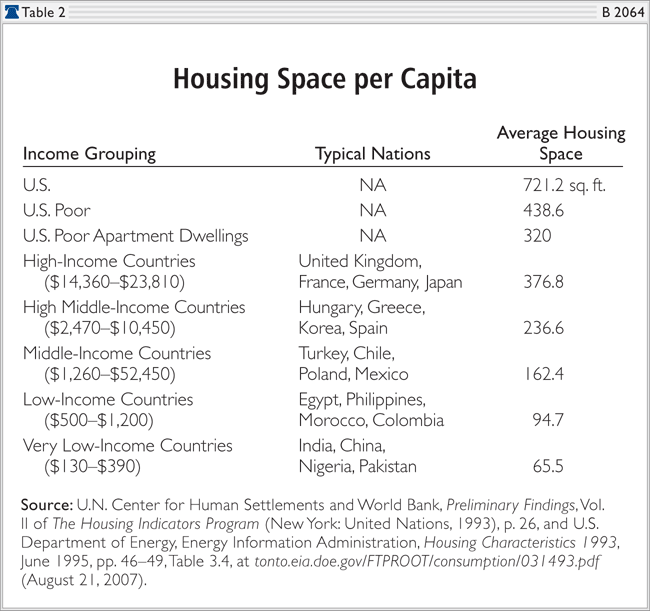
I was in an old mill-worker tenement building today, which got me thinking about the density of human shelter around the world. I covered this subject in THE WELL DRESSED APE, but am too cozy to venture into the frosty attic to retrieve the relevant research paper. So here is someone else’s graphic of how many square feet we humans inhabit, in various parts of the world.

How big is 65.5 square feet? One king-size bed plus a twin.