YOUNG PEOPLE ALL NESTY AND OPTIMSTIC: WHAT WENT WRONG?

Art: trulia

Art: trulia

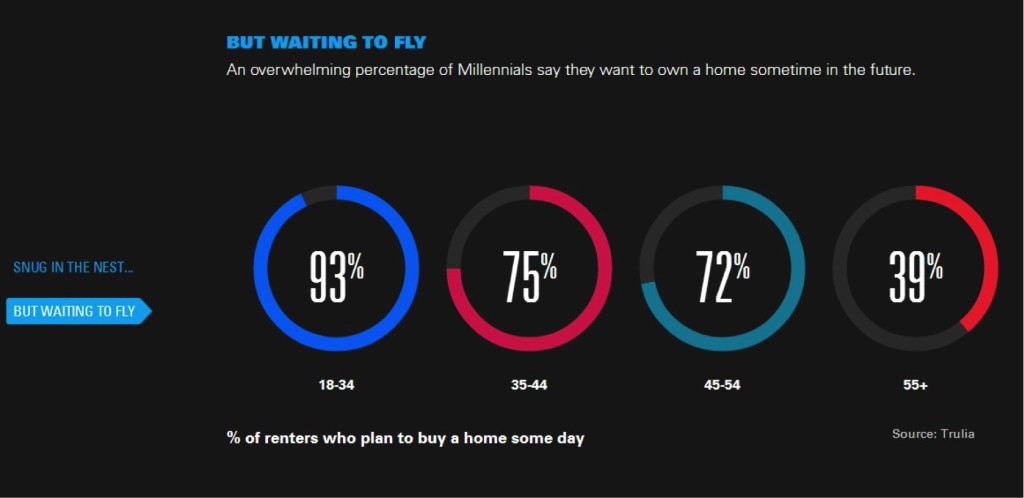
I simply don’t know what to make of this. Every young person in America apparently wants to own a home. And very few older people do.

This Trulia survey of current renters suggests that the burning desire for ownership cools inexorably under the chill wind of age and experience. Or it suggests something else. I’m quite curious about it. But I’m most curious about these Millennials being all nesty and optimistic. It actually fits my experience with them as real estate clients.

These people were supposed to be sway-backed under the burden of debt, and dismal-eyed about their employment prospects. What went wrong? Well, they’re also considered a conscientious and idealistic batch of humans. And that’s what I see.

I’m excited about the communities they’re going to build.

HOME OWNERS, RENTERS, AND SQUEAKY WHEELS

Wikimedia [PD]

Wikimedia [PD]

It’s not uncommon for house-shoppers to steer clear of a neighborhood with a lot of renters. The perception is that renters “don’t care” about maintaining a safe and friendly neighborhood. Do they not care? Or do they not feel they have the right to care?

This little study demonstrates that, while renters are just as inconvenienced as owners are by  potholes, dead streetlights, and other degenerative diseases of a city, they are far less likely to complain about them.

Homeowners in Boston are three times more likely to file a complaint than renters, although renters outnumber owners two-to-one. And because 80% of the complaints address problems within two blocks of the citizen’s residence, the issues are likely to be the sort of things that impact renters and owners equally.

There is something magical about writing a property-tax check, I think. It feels like a direct purchase of city services, and entitles the homeowner to question the value of those services.

While renters most assuredly pay property taxes, they do so indirectly, handing the money to their landlords. Does that disconnect renters from their local government? That’s hard to say. But this study says that renters either don’t object to driving around potholes, or don’t believe anybody cares.

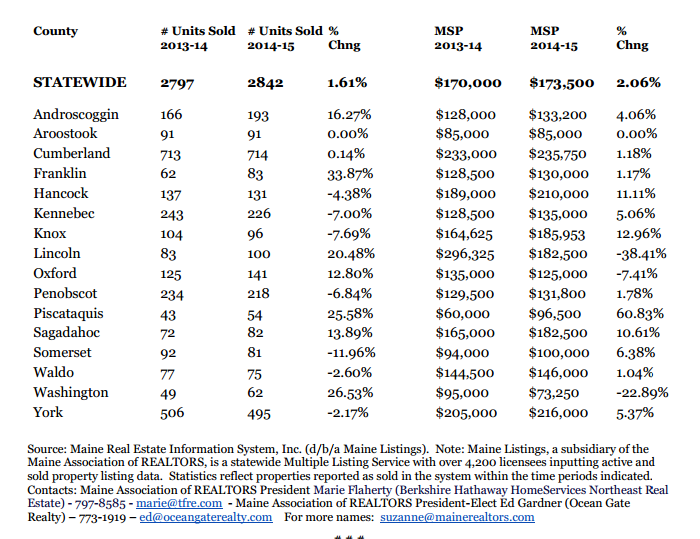
JANUARY REAL ESTATE STATISTICS IN MAINE

JANUARY THAW?

JANUARY THAW?

Weird, still weird in Maine: not enough houses where people want them (intown Portland, pretty much, or a second home on water); and too many, faaaaaar too many, in much of the remaining acreage of this post-industrial landscape.

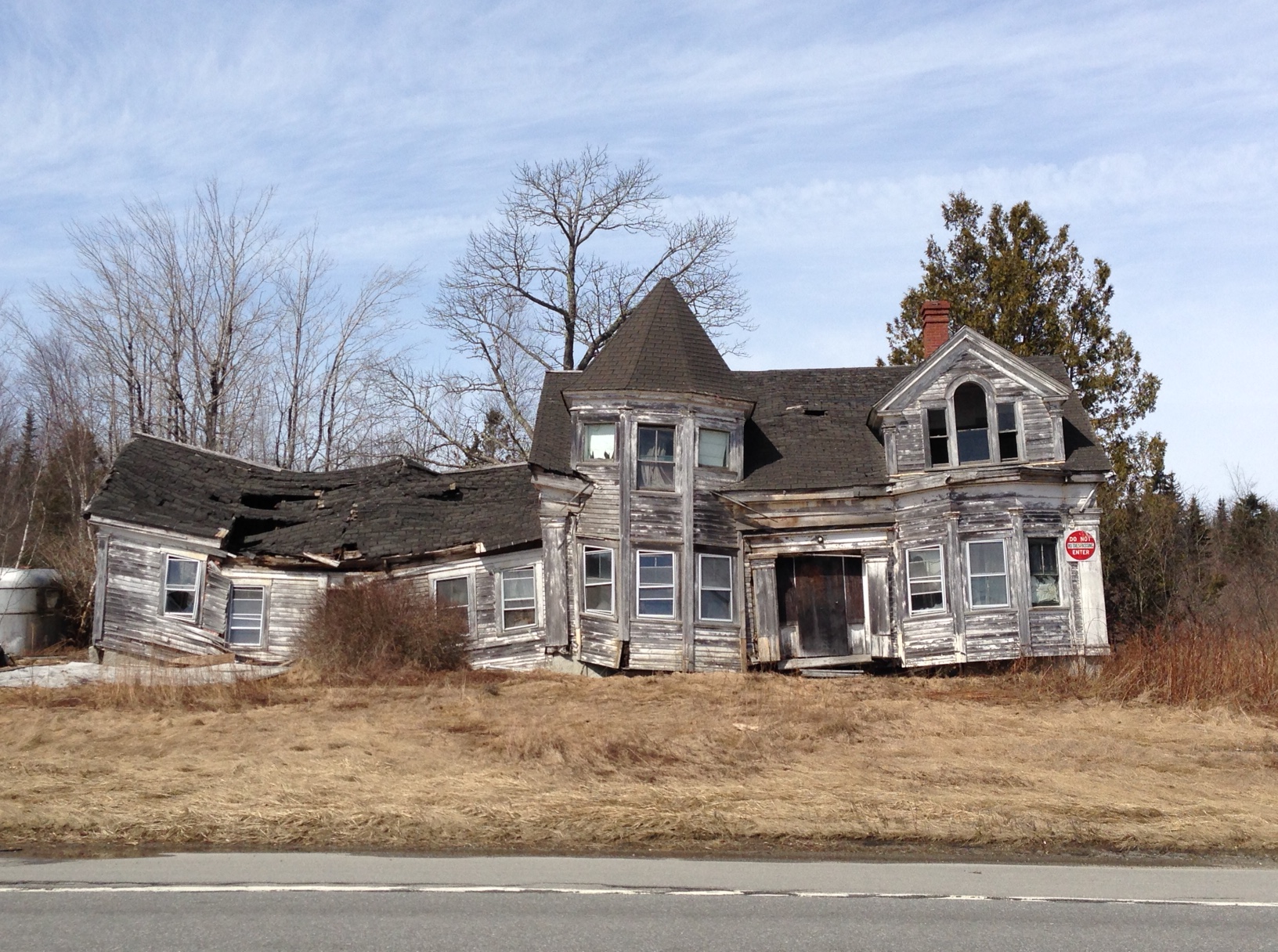
I often wish it were easier to slide houses around, or helivac them to where they’re wanted. Whenever we visit my inlaws in Glens Falls, NY, I get misty about the fabulous old Victorians, Greek Revivals, Brick Behemoths, and Umpteen-Gabled Bungalows. Many of them are empty, crumbling, bed sheets across the windows. If they were in Portland, they’d be inhabited, and adored.

People used to move houses a lot more than they do now, by ice or water, or ox-team. Now that houses are quicker to build and expensiver to move, we’ve kind of quit.

Since humans left home, our species has faced this problem. We’re restless by necessity. We must follow food, whether it’s in the form of wildlife or jobs. If our shelters can’t be rolled up and dragged along, they must be left behind.

The abandoned and unloved houses haunt me. They were built to solve an urgent human problem, and often the artistic ideals of the builders were recorded in the process–as were the additions and subtractions of future inhabitants. And then they’re left, these rooted, semi-living things, to die.

Pretty philosophical, for a sheet of number, perhaps. I plead extenuating circumstances.

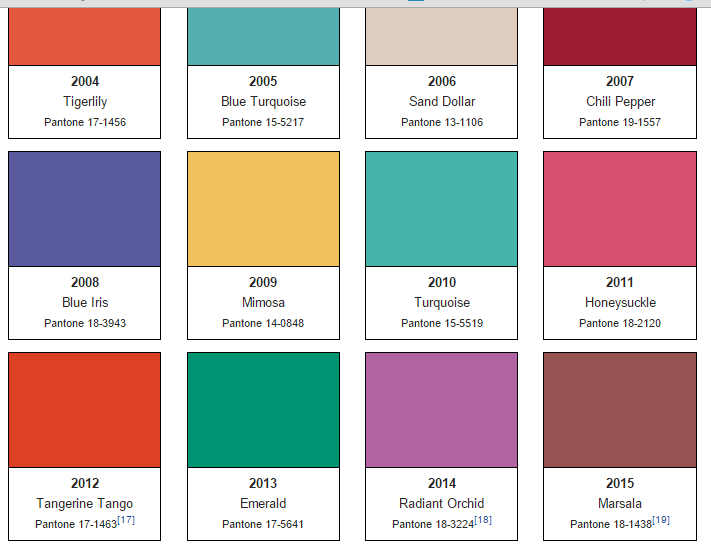
COLOR OF THE YEAR, 2015: BLOOD STAIN

Marsala (lower right) and prior offenders.

Marsala (lower right) and prior offenders.

Murderers take note: In 2015, should the color-mavens at Pantone have their way, hiding blood spatter at the murder scene should get a whole lot easier.

This year’s color is actually named Marsala, so cleaning up wine spatter should go a little faster, too.

While I like this color as a lipstick, (in which world it would go by “plump raisin,” “bruised plum,” or “blood stain”), without some pretty lively friends I think  it’s going to seem high in gray, and low in happiness. An accent color? Maybe. But what would the main color be? What color, really, goes with blood? Cooling Corpse?

If you had to pick a color to inspire your 2015, right now, what would it be?

ADJUST THE THERMOSTAT, OR STEADY ON?

Heat being heat. [PD] Wikimedia

Heat being heat. [PD] Wikimedia

Of course it’s not that simple. It’s all about mass. And the mass of one house can be arranged quite differently from the next. It’s particularly the hot mass you need to keep in mind.

The Umpteenth Law of Thermodynamics says every speck of matter  in the universe is trying to arrive at the same uniform temperature. Hot things are forever shedding heat, and cold things are forever absorbing it. We try to arrange our homes in a way that prevents heat from radiating out into the cold air, snow, trees, cars, and the black universe. But heat escapes nonetheless.

And the warmer your house is, the faster heat will pulse outside to achieve harmony with coldness. That’s why it saves energy to turn the thermostat down when you’re sleeping or working: The closer the inside temperature is to the outside temperature, the less ambitious the heat is about cooling off.

The big, fat caveat, especially here in Maine where many old houses still hiss and thump along with steam heat, is that mass messes up the thermodynamics (which weren’t particularly tidy to begin with). Steam has to heat up hundreds of pounds of cold, iron radiator before much heat can pass into the air and the walls and the toilet seat. Same goes for radiant heat in concrete floors: The heating mass takes a long time to cool off; then a long time to heat up.

Even so, turning the thermostat up and down for an old steam system doesn’t make the furnace work any “harder,” or burn more fuel in the long haul. It truly does save energy (money), says the Department of Energy–about 1% savings per degree if you turn down for eight hours a day.

The problem is that you may not love the sluggish changes in temperature that result from a massive heating system: By the time the bathroom gets warm in the morning, it’s time to go to work.

The cool news is that new thermostats are much better at physics than I am. Brainy new appliances can continuously calculate the ideal timing of your furnace’s bursts of effort.


THE INSULATING VALUE OF SNOW

Harald_Sohlberg_-_Street_in_Røros_in_Winter_-_Google_Art_Project

[PD] wikimedia

There’s a silver lining to the six feet of snow that have dropped on our heads these past few weeks: It’s free insulation.

In fact, I shovel mine right up against the house. I guess I learned this from my mom, who each winter would circle the crumbling foundation of our derelict farmhouse shoveling snow against the walls.

Snow has a substantial R Value (insulating power), averaging 1 R per inch. Fiberglass and cellulose insulations are only in the 3-to-4 range. Bazillions of animals and plants have evolved to use only snow insulation to survive the winter.

A bazillion plants and animals and my mother can’t be wrong. If you have a leaky basement, as many of us do, because Maine has the most ancient and decrepit housing stock in the nation, you might be concerned about your snow insulation ending up on your cellar floor. That could totally happen.

1: So what?

2: The next time it’s physically feasible, bank the earth around your foundation so that melting snow, rain, and cat pee will roll away from your basement.


HOME AND REMODELING SHOW THIS WEEKEND

fixer upperIt’s too cold to work on the outside of your house. In fact, it’s too cold to work on the inside of your house. But it’s just right to leave your house, and wander around the Portland Civic Center* thinking of all the things you could do to improve your house, given a hospitable temperature, and all the time and money in the world. Thinking about improving your house is better than nothing, and since your brain burns a ton of calories, it’s a double-winner: You’ll be improving both your house and your health.

Saturday 10-6

Sunday 10-4

Grown ups $8 DISCOUNT COUPON

*Cross Arena. I may never get used to that. While “Civic Center” is all democratic and civical-sounding, Cross Arena just sounds short-tempered.

REALTORS, WRITING, AND ARITHMETIC: AVERAGE EDUCATION LEVELS

National Assn Realtors

National Assn Realtors

In Maine, you need no more formal education than a high-school diploma to qualify for a real estate license. In California, you don’t even need that. I think that’s a little weird. Now, every state does require at least some special classroom training, and then a state exam. But, having sat through a fair amount of that special training myself, I’m pretty sure most fifth-graders, as well as certain minerals, could pass. It freaks me out a little. I mean, consider this ad copy for a California real estate school:

How difficult are your courses?

Our courses are not difficult to pass. The Final Exam for our courses consists of 100 multiple choice questions, and it is an Open Book Online Exam.

How difficult is the State Exam?

The State Exam is not easy, generally the state-wide pass rate hovers around 50%.

Noooo, I’m not talking about the ad hoc capitalization, or the conjoined sentences. I’m just thinking that if you’re impressed by a sales pitch that trumpets a 50% failure rate, you probably should have applied yourself a little more vigorously in fifth grade.

I’m just thinking that if the National Association of Realtors thought trumpeting its pretty, new graph of education levels was going to impress anyone, well…


PEOPLE WHO OWN GREEN HOMES DESERVE BETTER CREDIT SCORES

Honey, what's our credit score? [PD]Wikimedia

Honey, what’s our credit score? [PD]Wikimedia

People who live in green houses pay their bills. So finds a study of mortgage meltdowns: People who buy energy-efficient homes are 32% less likely to default than the average buyer.

Why? So many possible reasons. People who care about efficiency are by definition long-term thinkers. They think about the future. They make plans.

But also, people with efficient homes have lower carrying costs. Because banks don’t yet consider carrying costs in such detail, banks don’t give buyers credit for the money a low heating bill puts in the owner’s pocket. So efficient-house buyers are “richer” than banks can conceive.

And efficient homes are more likely to be bought by people with flexible mindsets, who aren’t puzzled by freakishly small furnaces, multiple fuel sources, heat pumps, heat sinks, geothermal gizmology, thick walls, and other peculiarities of green building. Flexible thinkers are also more likely to find a creative way out of a financial crunch, according to me.

This jives, oddly enough, with a study I saw yesterday linking pro-environmental behavior with the personality facets, Openness to Experience, and Conscientiousness.

50 SHADES OF FHA

B&D, FHA style. wikimedia commons pd

B&D, FHA style. wikimedia commons pd

Numbers are the least sexy part of real estate. But let me see what I can do here to pump up the excitement: $98 a month, that’s what Obama’s new mortgage change will mean to the average Portland home-buyer who’s hot for an FHA loan.

FHA loans do help people of limited means slip into comfortable homes. But these loans tend to be turgid with fees. Among the most rapacious of these is the “mortgage insurance premium.” Right now, that fee engorges the purchase cost of your house by 1.35%.

This may not sound like a huge hunk, but whip out your calculator. Actually, let’s ask my smokin’ hot pal Laura D’Andrea (laura@lendersnetwork.biz) to whip out her calculator: She’s a Portland mortgage originator, and would be the first to assure you that size does matter. Taking an average Portland home, here’s the impact of the sleeker, stripped-down mortgage insurance premium (MIP). For a $245,000 house:

With the minimum 3.5% down payment, under the current MIP rate, you’ll pay about $266 each month just for the MIP. But for that same loan approved after January 26, the MIP payment will be $98 less. Over the life of a 30-year loan, that’s $35,280 in your pocket.

That’s $35,280 you could spend buying the house you’re passionate about vs. the house your mother would choose for you.

Now, two things about the MIP still rub me the wrong way. With “conventional” loans, you can slip the sweaty grip of MIP once you’ve paid for 20% of the home. After all, the whole point of mortgage insurance is to make sure the lender can recover its money if you pull a one night stand–and if the home is worth 20% more than the loan balance, the lender should be safe.LD

But FHA plays rough. It’s going to squeeze you tight for the entire life of the loan. So go ahead and take a tumble with this enticing new MIP. But keep that safe word on the tip of your tongue: Refinance!